Verifactu: what it is, when it takes effect and who it affects.
Verifactu is the new AEAT system designed to combat tax fraud through real-time invoice verification. Find out how it affects your business and how to comply with the regulation.
 Start free with Google
Try Holded free for 14 days. No credit card required.
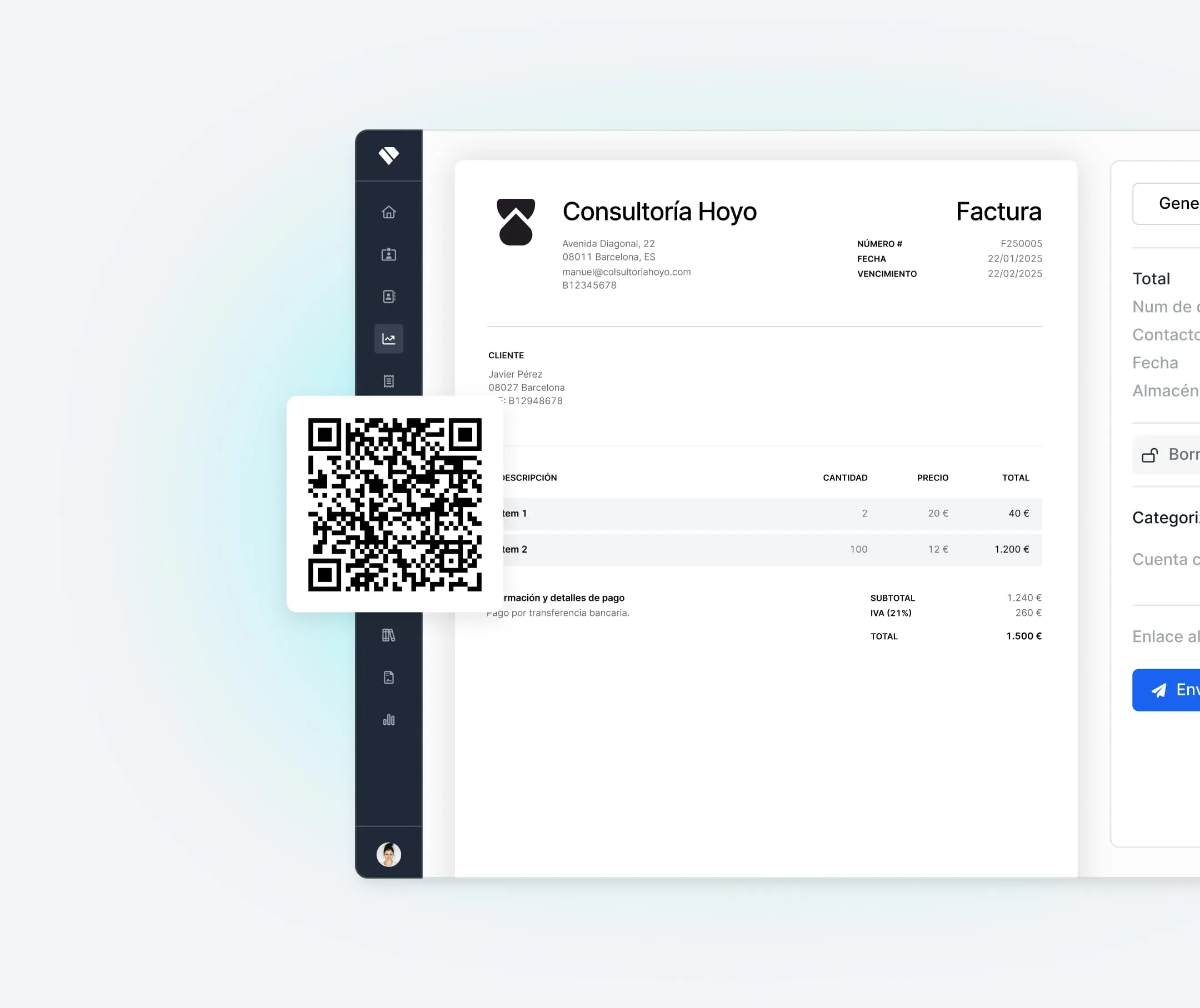
What is Verifactu?
Verifactu is an electronic invoice verification system driven by the Spanish Tax Agency, aimed at combating tax fraud and boosting digitalisation in business accounting processes. The Verifactu verifiable invoice system (or Veri*Factu) ensures that invoices from businesses and freelancers are authentic, complete and fully traceable throughout the entire process, enabling real-time information verification and anomaly detection.
Those required to implement the Verifactu system are the electronic invoicing software providers. When a freelancer or business starts using their approved invoicing software, they can choose whether to voluntarily submit their invoices to the Tax Agency or not. Although there are exceptions.
The Verifactu system's main features include the automatic and secure submission of invoicing records to the Spanish Tax Agency (AEAT), ensuring data integrity, traceability, unalterability, accessibility and readability. Verifactu provides security by reducing tax fraud, guarantees invoice authenticity, simplifies the electronic invoice verification process, speeds up procedures and much more.
On 1 April 2025, Royal Decree 254/2025 was published, approving the Regulation that establishes the requirements for invoicing software. Therefore, the deadline for software providers is 29 July 2025. For Corporate Tax taxpayers, the deadline to adapt their invoicing software is 1 January 2027. For all other taxpayers (freelancers, SMEs and other entities), the deadline is set at 1 July 2027.
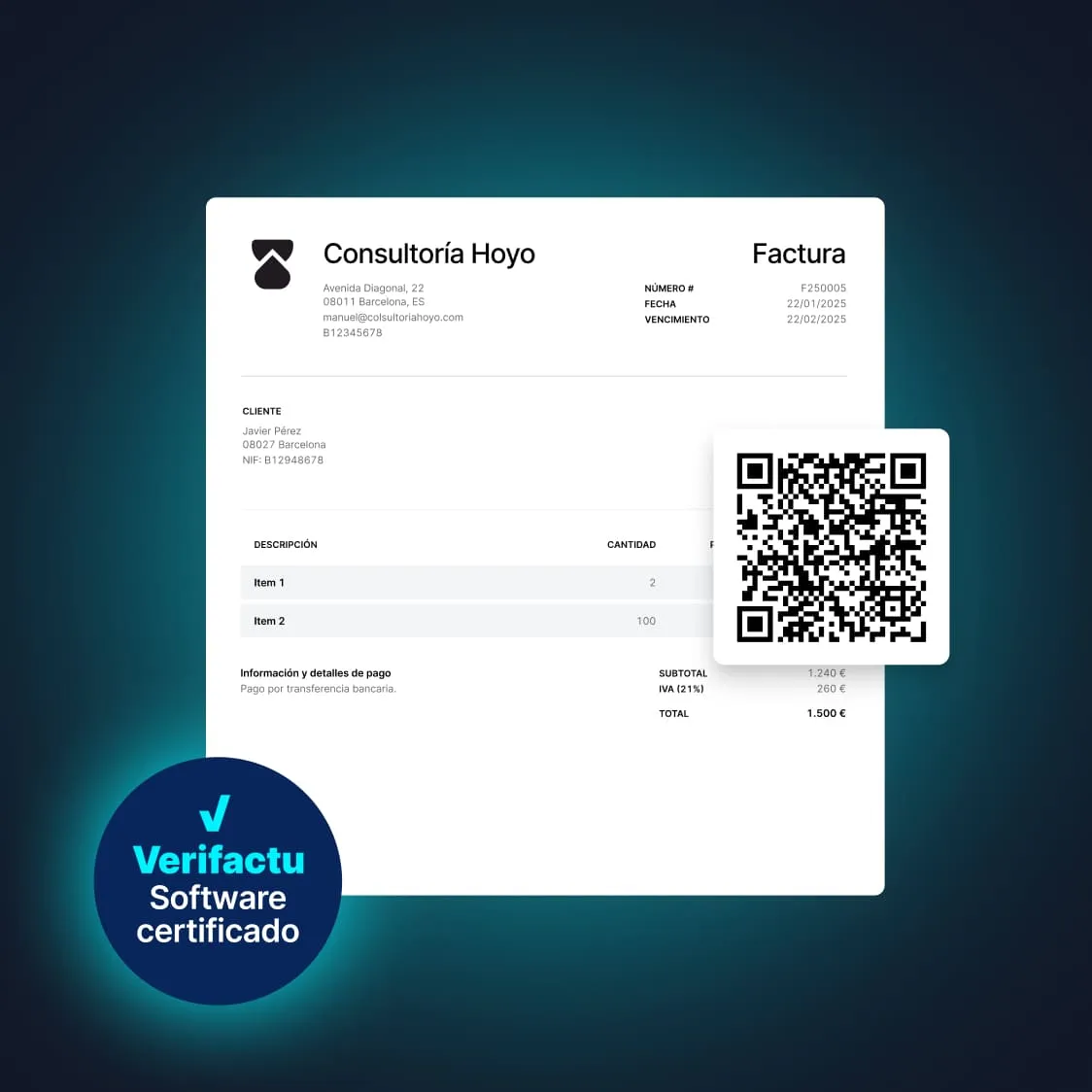
Everything about Verifactu in 5 minutes
Key dates for entry into force
Verifactu will be rolled out progressively. These are the dates you need to keep in mind to comply with the regulation.
Invoicing software
29 July 2025
Invoicing software developers and providers must have their systems adapted and certified to meet Verifactu requirements.
Companies (Corporate Tax)
1 January 2027
All companies subject to Corporate Tax — regardless of turnover — must use a Verifactu-compliant invoicing system.
Freelancers & professionals
1 July 2027
Freelancers and other taxpayers under personal income tax (IRPF) must comply with the Verifactu regulation from this date.
28 October 2024
Ministerial Order published
Order HAC/1177/2024 is published, setting the technical requirements for the Verifactu system.
29 July 2025
Software developers adaptation
Deadline for invoicing software developers and providers (SIF) to adapt their programs.
1 July 2027
Mandatory for freelancers and other professionals
Freelancers and other taxpayers must comply with the Verifactu regulation.
1 April 2025
Royal Decree 254/2025
The regulation establishing requirements for invoicing software is approved.
1 January 2027
Mandatory for companies (Corporate Tax)
All companies subject to Corporate Tax — regardless of size — must issue invoices with Verifactu-compliant software.
28 October 2024
Ministerial Order published
Order HAC/1177/2024 is published, setting the technical requirements for the Verifactu system.
1 April 2025
Royal Decree 254/2025
The regulation establishing requirements for invoicing software is approved.
29 July 2025
Software developers adaptation
Deadline for invoicing software developers and providers (SIF) to adapt their programs.
1 January 2027
Mandatory for companies (Corporate Tax)
All companies subject to Corporate Tax — regardless of size — must issue invoices with Verifactu-compliant software.
1 July 2027
Mandatory for freelancers and other professionals
Freelancers and other taxpayers must comply with the Verifactu regulation.
Holded, certified for Verifactu
Schedule a meeting with our team and discover how easy it is to comply with Verifactu using Holded. We will guide you through every step of the adaptation process.
Who is affected?
Which businesses and freelancers are required to comply?
Verifactu affects the vast majority of businesses and professionals who issue invoices in Spain. Learn who is required to comply and what the exceptions are.
Approved software
All businesses and freelancers who issue invoices must use approved and certified invoicing software, such as Holded, that meets the technical requirements of Verifactu.
If you issue invoices, it affects you
Regardless of your company size or invoicing volume, if you issue invoices you are required to comply with Verifactu within the established deadlines.
Exceptions
Exempt are taxpayers in foral territories (Basque Country and Navarre), companies under the SII (Immediate Information Supply) system, and those not required to issue invoices.

Requirements for invoicing software
How can you tell if your invoicing software complies with Verifactu? These are the technical requirements that any approved program must meet.
Unalterability and integrity
The software must generate a hash and electronic signature for each invoice, ensuring that records cannot be modified once issued.
Information submission
The system must enable automatic data submission to the AEAT via electronic certificates, ensuring secure, real-time communication.
Traceability
It must maintain a chain of linked records that allows every operation to be traced from creation, guaranteeing full traceability.
Responsible declaration
Software providers must issue a responsible declaration certifying that their system meets all the requirements of the Verifactu regulation.
Retention and accessibility
All invoicing information must be retained in an accessible and exportable format for the legally established periods.
QR and authentication
Each invoice must include a verification QR code and the legend 'VERI*FACTU' enabling the recipient to verify its authenticity with the AEAT.
Advantages
Benefits of implementing Verifactu
Beyond regulatory compliance, implementing Verifactu brings tangible benefits to your business management.
Reduce risks
Minimise the risk of penalties and tax audits by ensuring all your invoices comply with current regulations from the very start.
Security and transparency
Every transaction is recorded with an electronic signature and hash, providing maximum security and transparency across all your business operations.
Competitive advantage
Getting ahead of the regulation and having instant invoice validation positions your company as reliable and committed to fiscal transparency.
Guaranteed authenticity
Every invoice issued with Verifactu has its authenticity guaranteed, building trust with your customers and business partners.

For SMEs and freelancers
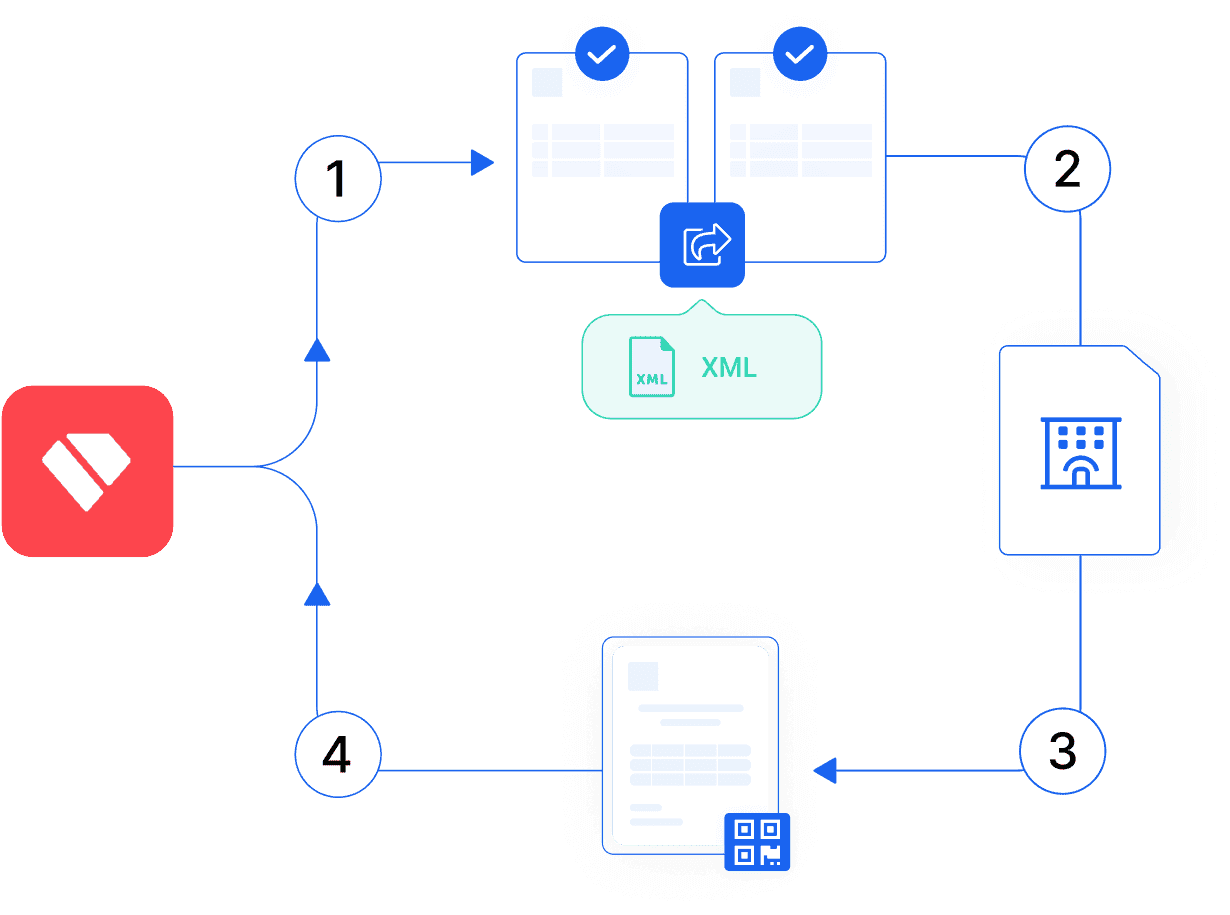
How Verifactu works
The invoicing process with Verifactu is simple and automated. Here is how it works step by step.
File generation
When issuing an invoice, the software generates an IT file with an electronic signature and a unique hash for each invoicing record.
Submission to the AEAT
The file is sent simultaneously and automatically to the Tax Agency, which records and validates the information in real time.
Invoice for the buyer
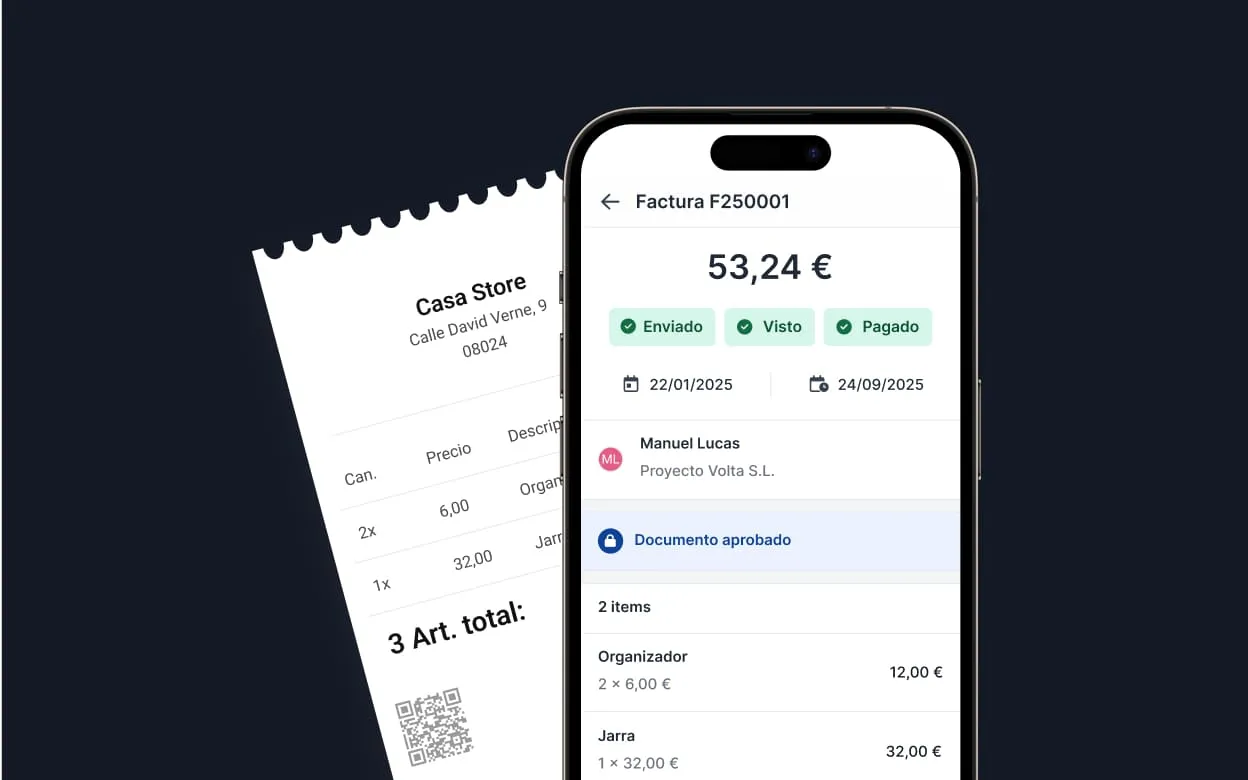
The buyer receives the invoice or receipt with a printed QR code that allows them to verify its authenticity immediately.
Verification
The buyer can scan the QR code to check the receipt on the AEAT electronic office and verify that the invoice is valid.
Regulations and legislation
Learn about the laws and regulations that frame the Verifactu system and electronic invoicing in Spain.
Verifactu Regulation
The Verifactu Regulation is a set of rules designed to govern the issuance of electronic invoices, guaranteeing the authenticity, integrity and verification of commercial operations. It seeks to optimise invoicing processes through secure technological systems, aligned with legal and fiscal requirements.
Crea y Crece Law
Establishes mandatory electronic invoicing in B2B relations, with the aim of reducing late payments and fostering digitalisation.
Anti-Fraud Law
Introduces technical requirements for invoicing systems, creating the Verifactu system to guarantee the integrity and traceability of invoices, and prevent tax fraud.
Issuance and registration process
The invoice issuance and registration process with the Verifactu system follows an automated workflow that guarantees data integrity from invoice creation to verification by the AEAT. Each invoice is recorded with an electronic signature and a unique hash, ensuring its unalterability and full traceability.
Try Holded free for 14 days
Start for freeData sent to the Tax Agency
These are the main data items that the Verifactu system transmits to the Tax Agency with each invoice.
Issuer and recipient data
Includes the tax ID, name or company name, and fiscal address of both the invoice issuer and recipient.
Invoice identification
Invoice number, series, issue date and transaction date that uniquely identify each document.
Tax details
Taxable base, tax rate, tax amount, withholdings and the breakdown by applicable VAT type.
Transactional information
Description of the operation, invoice type (full, simplified, corrective) and fiscal regime code.
Control metadata
Chaining hash, electronic signature, verification QR code and registration timestamp.
Verifactu invoice example
An invoice issued with the Verifactu system includes several mandatory elements that distinguish it from a conventional invoice: the 'VERI*FACTU' legend certifying its issuance through the official system, a QR code allowing the recipient to verify its authenticity on the AEAT electronic office, and a digital signature with hash guaranteeing its integrity and unalterability.
How does Verifactu affect freelancers, SMEs and companies?
The impact of Verifactu varies depending on the type of taxpayer and applicable tax regime.
Objective estimation (modules)
Freelancers under objective estimation (modules) are also required to comply with Verifactu. They must use approved invoicing software that meets the regulation's technical requirements, even though their tax obligations are calculated in a simplified way.
Freelancers and self-employed
Freelancers and independent professionals must adapt to Verifactu before 1 July 2027. This means migrating to certified invoicing software that automatically generates and sends invoicing records to the AEAT.
SMEs and companies
All companies subject to Corporate Tax — regardless of size or turnover — must comply with Verifactu before 1 January 2027. There is no differentiation by turnover threshold: the deadline is the same for large corporations and SMEs alike.
International operations
The Verifactu system applies to all operations that must be declared to the AEAT, including intra-community operations and exports requiring invoice issuance. Companies carrying out international operations must ensure their invoicing software meets Verifactu requirements for the correct issuance and registration of these invoices.
Penalties for non-compliance
Non-compliance with the Verifactu regulation carries serious financial penalties for both software providers and businesses using non-compliant systems.
€150,000
per fiscal year for anyone who manufactures, produces or sells invoicing systems or software that do not meet the regulation's requirements.
€1,000
per non-certified invoicing system or program sold without meeting the established requirements.
€50,000
per fiscal year for businesses and freelancers using invoicing software that does not comply with the Verifactu regulation.

Support and resources
Resources, grants and subsidies
There are various grants and resources available to help your business adapt to the Verifactu system.
Kit Digital
The Kit Digital programme offers grants for the digitalisation of SMEs and freelancers, including the implementation of approved invoicing software compatible with Verifactu.
Chambers of Commerce
Chambers of Commerce offer training and personalised advice on Verifactu requirements and electronic invoicing for businesses and freelancers.
AEAT documentation
The Tax Agency provides technical documentation, implementation guides and a consultation service to resolve queries about the Verifactu regulation.
Your ally
How Holded adapts to Verifactu
Holded implements all the features needed to comply with Verifactu simply and without complications.
Draft invoices
Save your invoices as drafts before sending them to the AEAT. Review and correct the data before the invoice is permanently recorded.
Invoice cancellation
Cancel invoices easily with automatic AEAT connection. The system handles the entire cancellation process in accordance with current regulations.
Event log
Comply with the anti-fraud law with a complete event log. Every action is documented with a full, unalterable audit trail.

Holded is:
AEAT-approved software
Holded holds official certification from the Tax Agency to operate with the Verifactu system, guaranteeing compliance with all technical and legal requirements.
Automatic cloud invoicing
Create, send and manage your invoices from anywhere. Holded automates the submission of records to the AEAT and the generation of the QR code and electronic signature.
360° connection · Automatic accounting
Holded connects invoicing, accounting, treasury and management in a single platform. Every invoice issued is automatically recorded in your accounts, saving you time and errors.
What they say about us
Excellent management software
It makes it easy to manage expenses, income and I can keep my accounting information organised by projects.
Complete, simple and intuitive software
It has met my expectations, and at an affordable price compared to alternatives.
Great software
Great software whether you are a freelancer or a company, and at a reasonable cost.
Great automation
Great automation, even better support! Holded makes work easier and is intuitive.
The ebook with everything you need to know about Verifactu
Learn the key concepts of the Verifactu system and find out if your business is ready for the change.

Frequently asked questions
Verifactu is an invoice verification system that guarantees the authenticity and integrity of invoicing records through hashing and electronic signatures. Electronic invoicing, on the other hand, refers to the document format itself (an invoice in a structured digital format). They are complementary concepts: Verifactu verifies that invoices, whether electronic or not, meet the AEAT requirements.
When issuing an invoice, the software automatically generates a file with an electronic signature and unique hash. This file is sent simultaneously to the AEAT. The invoice or receipt is printed with a QR code and the reference 'VERI*FACTU', allowing the buyer to verify its authenticity on the Tax Agency's electronic office.
Failing to adapt to Verifactu carries significant financial penalties. Businesses and freelancers using non-compliant software may face fines of up to €50,000 per fiscal year. Additionally, manufacturers of non-certified software can be penalised with up to €150,000 per fiscal year.
No. Once an invoice has been issued and recorded in the Verifactu system, it cannot be modified, as unalterability is one of the system's fundamental principles. To correct errors, a corrective invoice or credit note must be issued to cancel or amend the original invoice.
An invoice verification system is a technology platform that allows you to manage, validate and verify the authenticity of electronic invoices. In the case of Verifactu, it is the official AEAT system that ensures invoicing records have not been altered and comply with current tax regulations.
Verifactu has four main objectives: 1) Combat tax fraud by guaranteeing the integrity of invoicing records. 2) Provide full traceability of commercial transactions. 3) Facilitate the AEAT's inspection work with real-time access to invoicing data. 4) Modernise and digitalise the Spanish invoicing system, aligning it with European regulations.
There are three key dates: on 29 July 2025, invoicing software providers must have their systems adapted. On 1 January 2027, all companies subject to Corporate Tax — regardless of size — must comply. And on 1 July 2027, freelancers and other taxpayers must be adapted.
Invoicing with Verifactu works in an automated way: when creating an invoice, the software generates a record with an electronic signature and hash that is automatically sent to the AEAT. The invoice includes a QR code that enables instant validation. The entire process is transparent to the user thanks to certified software.
Verifactu affects every taxpayer who issues invoices, with two deadlines based on tax regime. Companies subject to Corporate Tax — regardless of size — must comply before 1 January 2027. Freelancers and other personal income tax (IRPF) taxpayers have until 1 July 2027. Professional firms managing their clients' invoicing must ensure they use certified software, such as Holded.
To check whether your software complies with Verifactu, ask your provider if they have obtained AEAT certification. You can also check the official list of approved software published by the Tax Agency. If your current software does not comply, Holded is a certified solution that lets you adapt simply and without disruption.