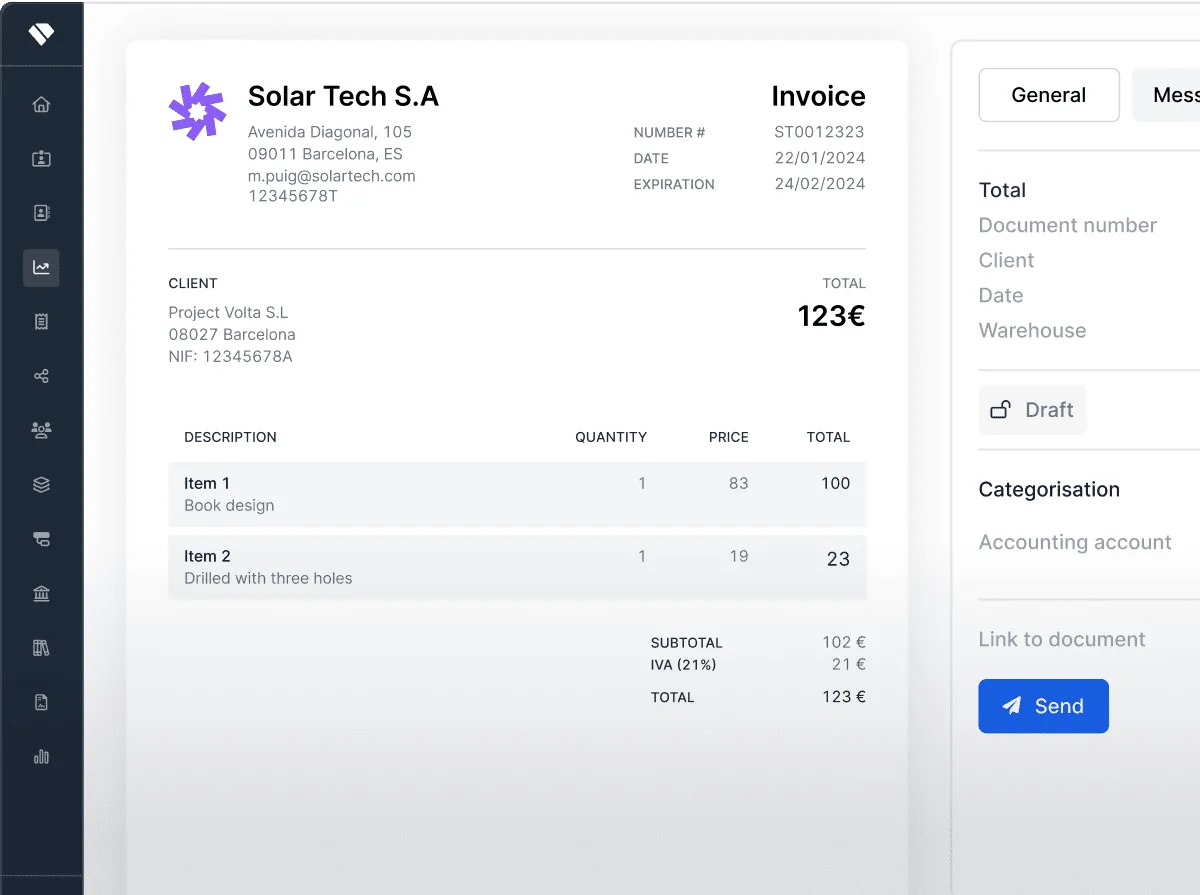
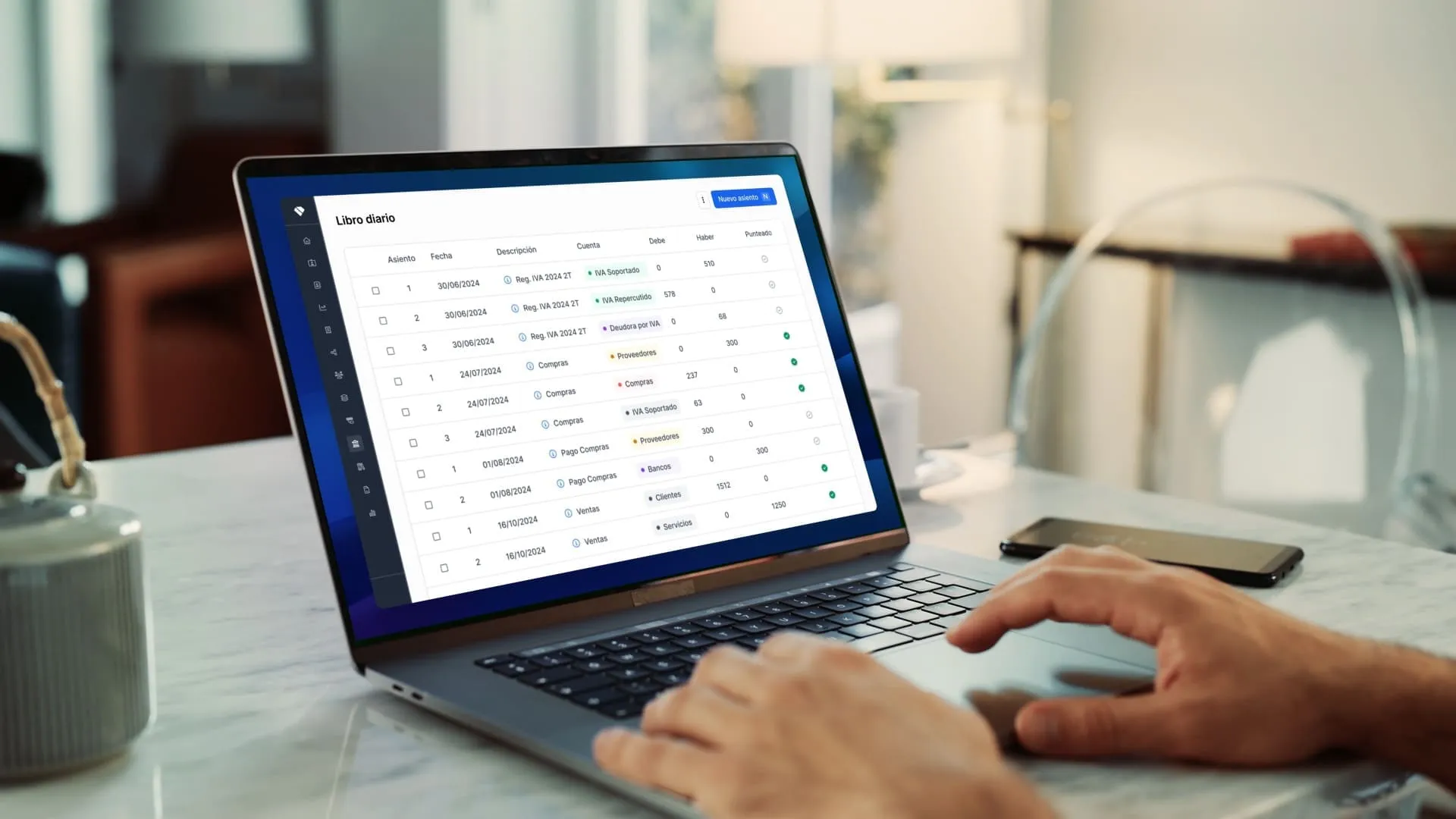
Holded is the business management software that makes it easy to create professional invoices for your business in just a few clicks.
It adapts to all your company's needs, saving you more than 40 hours of work per month.
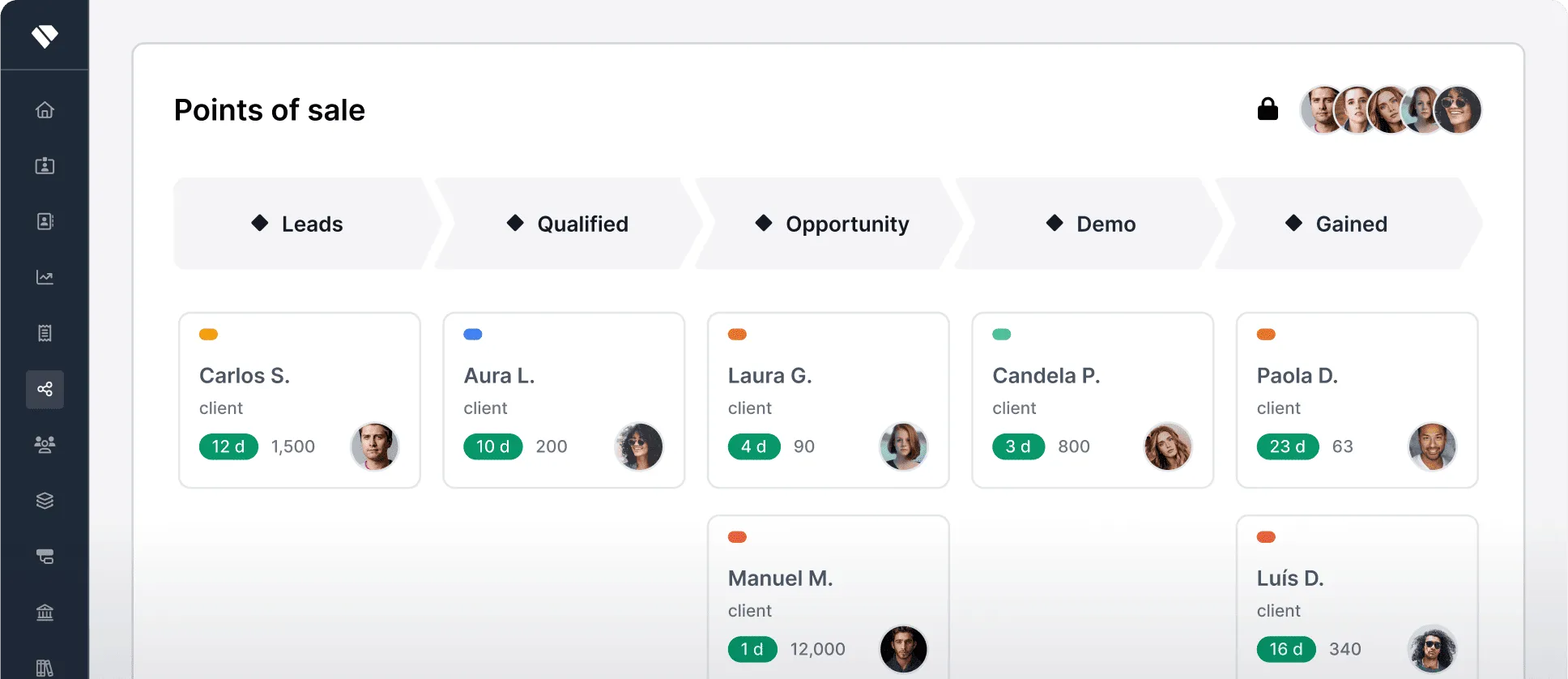
Follow the cycle of your sales by showing each of the stages up to the closing of a contract.
Identify your potential customers and create a short-term business scenario.
Create opportunities easily whenever you need to by filling in a form on the platform.
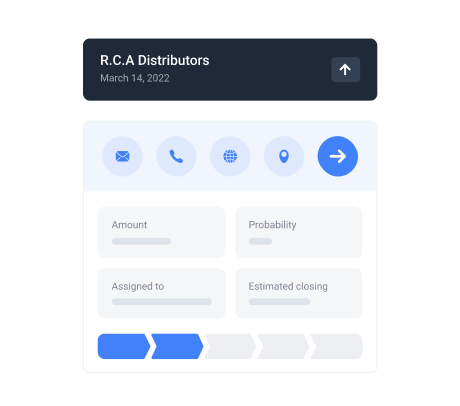
Check the creation date of the generated opportunity, estimated closing date, business potential and much more.
Add as much information as you want to your conversion funnels, change them, check their value according to the stage and add extra custom fields.

Get in touch with your customers and find out their needs quickly to make a proposal.
Share with your customer all the information you need (quotes, invoices, etc.) from a single place within Holded.
Create new contacts or import them to Holded in just a few clicks thanks to the templates made for this purpose.
Access all your customer information easily: employees, invoices, recent communications, unpaid invoices, etc.
Generate automatic reports that connect your invoices, orders and delivery notes in Holded with the stock of your contacts.
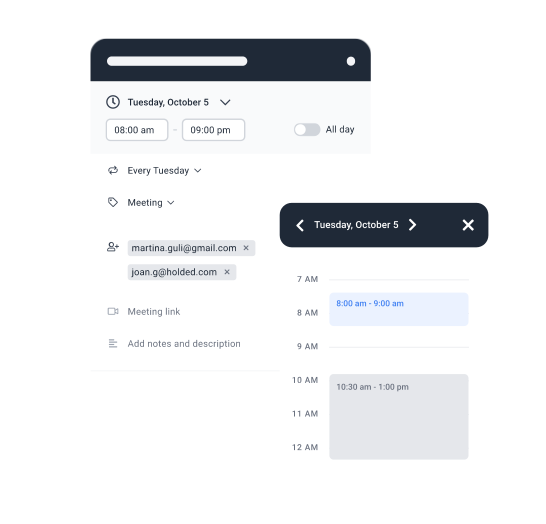
Display your company events and manage and monitor all CRM activities based on your availability.
Connect any external calendar with your Holded calendar to keep track of your hours in one place.
It makes it easy to "find the time", your guests will only have to choose the time that suits them best among those you have provided.
Avoid links with lots of numbers, you can customise the text of your meeting link to express what you want.
Limit the range of time your contacts can see you when booking a meeting.




They are free, even if you are not a client.
CRM stands for Customer Relationship Management. In short, a CRM is the software used to manage every aspect related to your customers—this includes marketing, sales management, after-sales service, and customer support.
You can think of it as an enhanced contact list that gathers a wide range of information about your current and potential customers: employees, invoices, recent communications, outstanding payments, and more.
This not only makes your work (and your team’s) easier and faster, but also significantly strengthens customer relationships.
An online CRM is, for all intents and purposes, a standard CRM software—except you don’t need to download or install anything to access it or use its features. For example, Holded is an online software, which means all tools are accessible from anywhere, and your information is always up-to-date.
A Customer Relationship Management (CRM) software typically serves three basic functions:
1. Recording, organizing, segmenting, and classifying a client’s basic information.
2. Keeping a history of each client’s interactions with the company—calls, emails, social media activity, etc.
3. Tracking the products and/or services each client has purchased or contracted.
However, these are just the fundamentals. The goal of a CRM is to optimize client relationships in a way that not only improves daily workflows, but also helps forecast future sales, attract new leads, boost revenue, analyze sales data, and define future strategies.
Studies show that a good CRM can increase sales by 29%, boost sales team productivity by 34%, and improve sales forecasting accuracy by 42%. The numbers speak for themselves.
With so many acronyms, it’s easy to get them mixed up. An ERP is software that manages business processes, while a CRM (Customer Relationship Management) is a system designed to manage relationships with customers.